
Related Posts


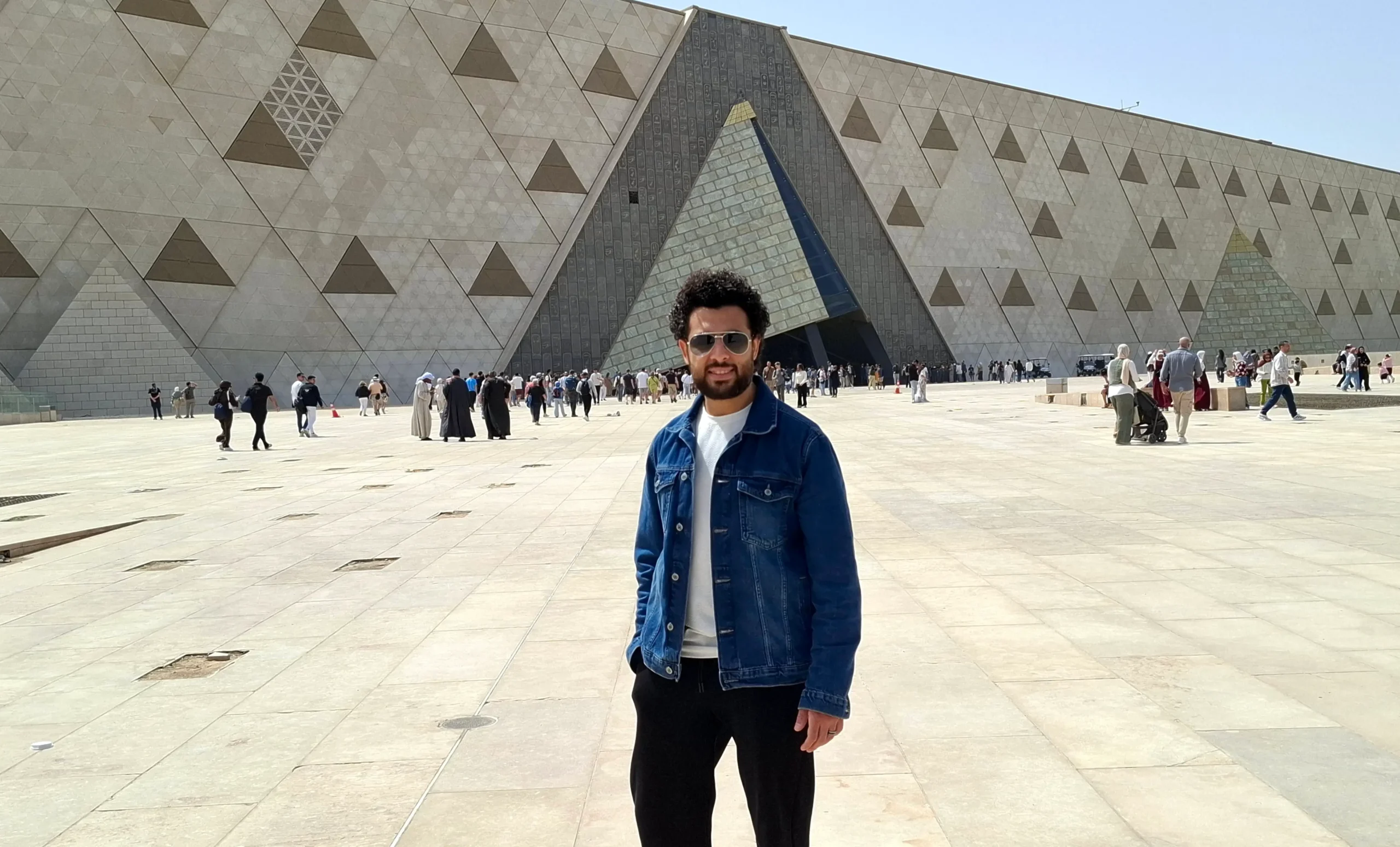
I grew up in Giza, walking home from school the same way every day. There was a shortcut through the desert that cut my commute down to about 30 minutes, just rocks and sand stretching under Giza's sun. One afternoon, I noticed a security guard sitting out there in the middle of nowhere, protecting what looked like absolutely nothing. I asked him what he was guarding. He pointed out across the barren landscape and said, "The Grand Egyptian Museum will be built here. It's going to replace the one downtown." I couldn't believe it. Here? In the desert? He added, seriously, that moving even a single stone was now illegal.
That was 2003. I was just a kid. The idea seemed impossible.
Fast forward 22 years, and I'm standing inside that museum. It's like a miracle. The Grand Egyptian Museum opened in November 2025, and honestly, it's harder to grasp than any ancient tomb I've ever visited. Walking through those galleries, I kept thinking about how something that seemed completely absurd as a kid was now real.
What Is the Grand Egyptian Museum?
The Grand Egyptian Museum, or GEM as people call it, is Egypt's newest anchor attraction. Located on the Cairo-Alexandria Desert Road near the Giza pyramids, it's not just another museum. This is a 500,000-square-meter complex, roughly equivalent to 70 football pitches, built over the course of two decades. We're talking about a structure so massive that moving the 11-meter Ramses II statue inside cost $770,000 just for the logistics.
Here's what matters most: GEM houses over 100,000 artifacts. At least 20,000 are being displayed for the first time ever. The Tutankhamun collection alone contains 5,398 pieces, and more than half of those have never been exhibited to the public before. If you wanted to spend just one minute looking at each artifact in this museum, you'd need 84 days. Three entire months of your life, and you'd still be rushing through. That's the scale we're talking about.
The Story Behind the Grand Egyptian Museum
The journey to get here was anything but quick. In 1992, the government allocated 117 acres near the Giza pyramids for this project. Then in 2002, the foundation stone was laid. The actual architecture competition happened in 2003, the same year I was having that surreal conversation with the security guard in the desert. Heneghan Peng Architects, an Irish firm, won the international competition to design it.
Construction actually kicked off in 2005, taking things slowly but seriously. By 2010, they'd finished the Conservation Center. Then in 2018, something significant happened: the famous Ramses II statue was moved from the square in downtown Cairo to the museum's Grand Hall. I remember watching the coverage of that move live. The statue is 11 meters tall, weighs 83 tonnes, and it's 3,200 years old. Watching it get transported was surreal.
The project kept progressing, though not without delays. By 2021, they'd moved the Khufu Solar Boat, the ancient solar barque that was discovered near the Great Pyramid, into the museum. In 2023, the Grand Stairs partially opened to the public. By late 2024, they had several main galleries open. Finally, on November 1, 2025, the Grand Egyptian Museum officially and fully opened its doors.
The Grand Opening That Stopped the World

The opening ceremony on November 1, 2025 wasn't just Egyptian. This was global. 79 international delegations showed up, including 39 heads of state and government. We're talking about Queen Rania of Jordan with Princess Salma, the Crown Prince of Abu Dhabi, the Crown Prince of Oman, leadership from Bahrain, and Saudi Arabia's Minister of Culture. This wasn't a local celebration. This was the world saying, "We're paying attention."
Before any of those guests even arrived, Egypt had already made a statement. The official invitations were sent out in the form of golden papyrus scrolls, rolled and sealed, placed inside miniature replica mummy sarcophagi. Yes, actual tiny pharaonic coffins delivered to world leaders and dignitaries. It immediately went viral. People couldn't believe Egypt pulled that off, and honestly, neither could I.
The ceremony itself was extraordinary. There were performances of dance, orchestra, and opera. A spectacular drone show lit up the sky, projecting the image of Tutankhamun's golden funerary mask above the Giza plateau. Then came the moment that gave me goosebumps: a full symphony orchestra performed "The Melody of Peace Around the World," a piece composed specifically for this occasion, blending ancient Egyptian musical scales with modern orchestral arrangements. Hearing that drift across the desert toward the pyramids, with fireworks bursting overhead, was unlike anything I've experienced.
The opening trended worldwide. People around the globe were booking flights to Egypt specifically to catch the opening ceremony and be among the first visitors. The museum resumed regular visitor access on November 4, which happened to be the 103rd anniversary of the discovery of Tutankhamun's tomb. That kind of timing doesn't feel like a coincidence, but actually, it was!
What to See Inside the Grand Egyptian Museum
Walking through GEM, you need to mentally prepare yourself for sensory overload. This isn't like visiting other museums, where you can casually stroll through. There's too much history packed into every corner.
The Grand Hall and the Ramses II Statue

When you first enter, the Ramses II colossal statue hits you. It's 11 meters of red granite, set on an artificial lake, depicting the pharaoh in a standing pose. The craftsmanship is incredible, but what gets me every time is the sheer presence of it. This isn't a small artifact you lean in to examine. This is a monument that demands respect. Catching a photo there is a must.
The Grand Staircase

The Grand Staircase features over 60 monumental statues arranged as you ascend. Walking up those stairs is like walking through Egyptian history itself. Each statue represents a different era, a different ruler, a different chapter. The design is deliberate: you're not just moving through space, you're moving through time.
The Tutankhamun Galleries

Now, this is where the Grand Egyptian Museum distinguishes itself from every other museum on Earth. The Tutankhamun galleries occupy 7,500 square meters, and they're organized chronologically. You start with King Tutankhamun's family history, move into his daily life, then explore the artifacts he took with him to the afterlife. Golden thrones, ornate chariots, delicate jewelry, ceremonial tools, statues of the gods.
But here's what makes it unique: you eventually encounter the shrine system. Four gilded wooden shrines that nested inside each other, progressively getting smaller. Then the three golden coffins, each one more elaborate than the last. The innermost coffin? It's solid gold and weighs 110 kilograms. And finally, the golden burial mask emerges. After everything you've seen, that mask still manages to feel like the moment. The room has VR stations, touch screens, and projected imagery throughout, all designed to tell the story without overwhelming you.

More than half of these Tutankhamun artifacts have never been shown in public before. That's not an exaggeration. This collection has been locked away in the Cairo Museum, fragmented, not displayed in any coherent way. Now, finally, you see it as it was meant to be seen.
One thing our guide told me stayed with me long after I left. Most pharaohs throughout Egyptian history were buried with similar collections of artifacts, treasures, and objects for the afterlife. Tutankhamun's collection isn't unique because he was exceptional among rulers, it's unique because his tomb is the only one found intact. Every other royal tomb we know of was looted at some point in history. What you're seeing in those 5,398 pieces is essentially a miracle of survival. And it made me think about everything we lost. How many collections like this were stolen, smuggled, scattered across private collections and foreign museums over thousands of years? As an Egyptian, that's a heavy thought to sit with.
The Khufu Solar Boat

The solar barque of Khufu is one of those artifacts that reminds you how sophisticated ancient Egypt was. It's an ancient boat that was buried near the Great Pyramid, meant to transport the pharaoh through the afterlife. Walking around this actual 4,500-year-old vessel, intact and massive, sitting in a climate-controlled gallery with proper lighting, is genuinely humbling.
Children's Museum
If you're bringing kids, there's an interactive children's museum within GEM. It's designed to make ancient Egypt accessible without dumbing it down. The exhibits let kids actually engage with the concepts, not just stare at glass cases.
The Infrastructure
What visitors don't always notice, but what makes the experience possible, is the technology. Advanced multimedia installations are throughout the complex. Interactive screens provide context. Climate control systems maintain precise temperature and humidity for artifact preservation. This isn't just a building filled with old stuff. This is a carefully orchestrated experience.
The GEM Market and Food
Just in front of the Grand Staircase, there's a small official GEM market worth a look. You'll find museum-related gifts, prints, and souvenirs that are a step above the usual tourist shop fare. You'll definitely get hungry, so there is a designated area for cafes and restaurants beside the market. Try Zooba restaurant inside the complex. Zooba is one of Egypt's popular modern street food concepts, and it's a good spot to try Koshary, Falafel, or Feteer.
The GEM-to-Pyramids Walkway
One of the smartest additions is the pedestrian and shuttle route that connects the Grand Egyptian Museum directly to the Giza pyramids. It's 1.27 to 1.45 kilometers long, with widths ranging from 13.5 to 27.5 meters.
The walkway features landscaped green areas, rest stops with shade, and service kiosks. There's an eco-friendly electric shuttle for those who don't want to walk. This walkway is what ties the whole tourism experience together. You can visit the pyramids in the morning, then spend the rest of the day in the GEM. You're staying in one geographic area and seeing the most significant collection of Egyptian artifacts and monuments possible in a single day.
If you want to make the most of that day and pair GEM with a guided Pyramids and Sphinx experience, you can book a guided day trip here. It's the number one recommended day trip in Egypt.
How to Visit the Grand Egyptian Museum
Booking Your Tickets
You can technically buy tickets on-site at the museum, but I'd strongly recommend against it. Lines get very long, and the guided tour tickets sell out fast. It's a timed entry system, so you pick your date and time slot and book online in advance.
The prices on the official GEM tickets website are exactly the same as what you'd pay through GetYourGuide. So why use GetYourGuide? Mainly if you want a guided tour in a different language than Arabic & English, or for the bundles. You can combine GEM with a Pyramids tour, add hotel pickup and drop-off, get flexible cancellation, or even book now and pay later on some listings. If that kind of flexibility matters to your trip, browse the available GEM tours and bundles here.
Two Types of Tickets
There are two different ticket options:
Option 1: Admission Ticket (entry only, explore at your own pace)
- Egyptian nationals: Adults EGP 200, children/students/seniors EGP 100
- Expatriates (residents of Egypt): Adults EGP 850, children/students EGP 425
- Foreigners: Adults EGP 1,590, children/students EGP 800
- Children under 6: Free
Option 2: Guided Tour Ticket (admission + group guided tour, currently available in Arabic & English only)
- Egyptian nationals: Adults EGP 350, children/students/seniors EGP 175
- Expatriates (residents of Egypt): Adults EGP 1,050, children/students EGP 530
- Foreigners: Adults EGP 2,090, children/students EGP 1,050
The guided tour runs about 2 hours. If you book a tour ticket, show up at least 15 minutes before your time slot. You need to collect your headset from the counter before your group heads in. I once missed my tour, so don't repeat my mistake!
Audio Guide and Voice Tour Assistant
There's another option worth knowing about that most visitors skip: the GEM Audio Guide and Voice Tour Assistant. For under $5, you get a handheld device and a headset. You browse by gallery or artifact number and get a documentary-style voiceover about each piece, and there's an AI voice assistant feature where you can ask questions and get instant answers. You can listen to samples on the website. It's also available for purchase on-site if you prefer not to pre-book.
If you're a solo explorer like me, this is a worthwhile add-on. The difference between staring at a 3,400-year-old artifact and actually understanding its story is significant.
Pro tip: Start your visit at the top, in the main galleries section. That's where the most important artifacts are. Leave the Grand Staircase and the Khufu Solar Boat hall for the end. The guided tour won't cover every gallery anyway, so after the tour wraps up, go back and explore what you missed, then make your way down the Grand Staircase, and finish at the Khufu Boat. This is the smartest time-saving order.
Hours and How Long to Spend
The opening hours depend on the day of the week, and they can shift slightly around daylight saving time, so always verify on the official GEM opening hours page before you visit. As of now:
- Sunday, Monday, Tuesday, Thursday, Friday: GEM Complex 8:30 AM – 7 PM | Galleries 9 AM – 6 PM | Last ticket purchase 5 PM
- Wednesday and Saturday: GEM Complex 8:30 AM – 10 PM | Galleries 9 AM – 9 PM | Last ticket purchase 8 PM
Most visitors spend 3 to 4 hours. That's realistic if you're covering only the main highlights. However, I'd encourage spending longer if you can. This isn't a museum where you're racing through. The Tutankhamun galleries alone deserve at least 2 hours if you're actually absorbing what you're seeing. If you want to properly experience GEM plus the pyramids, plan for a full day.
Getting There
The museum is on the Cairo-Alexandria Desert Road, Giza Governorate. If you're staying in central Cairo, it's roughly 20 to 30 minutes by taxi, depending on traffic. If you're based near the pyramids, you're just minutes away. Many hotels offer shuttle services, so check with your accommodation first.
Photography Tips

Personal, non-commercial photography and videography are permitted throughout the museum using mobiles and cameras. That said, there are important restrictions to know:
- In the Tutankhamun Galleries specifically, only mobile phone photography is allowed. No cameras.
- Flash photography is prohibited everywhere.
- Tripods, monopods, selfie sticks, drones, and external lighting are all prohibited.
- Live streaming is not permitted inside the galleries.
- Don't photograph other visitors or staff without their consent.
- Commercial photography (for advertising, TV, film, etc.) requires prior written approval from GEM and payment of applicable fees.
So bring your phone, leave the big camera kit at the hotel, and you'll be fine. And consider visiting on a weekday if possible. Weekends get crowded, and the experience is genuinely better when you're not pushing through crowds to see a 4,500-year-old statue.
Where to Stay Near the Grand Egyptian Museum
GEM is right next to the Giza plateau, so there are several solid accommodation options nearby. Staying close means you maximize your time exploring instead of commuting.
Luxury Options
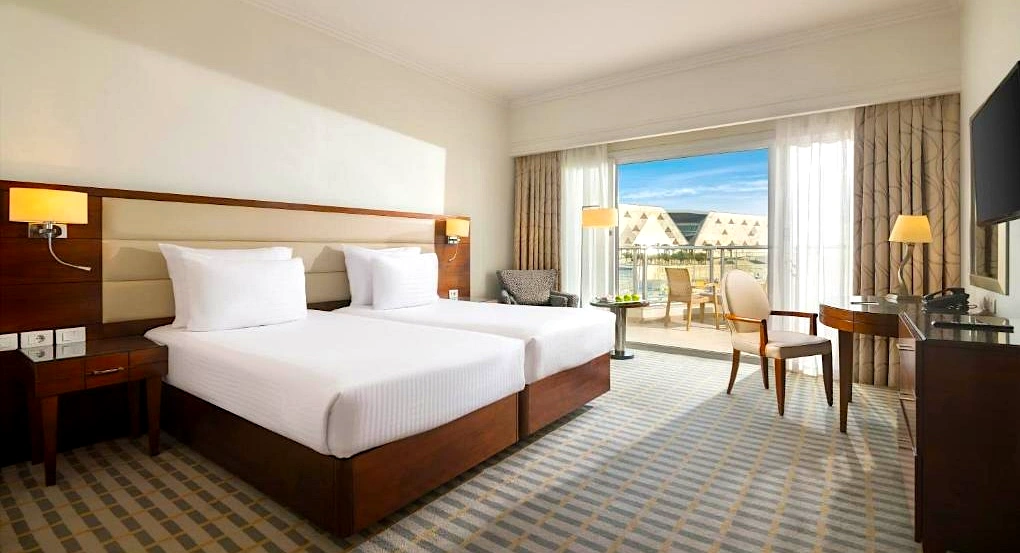
The Steigenberger Pyramids Cairo is literally opposite GEM. It's a 5-star property with pyramid-view rooms, so you wake up looking at Khufu's pyramid. It's about 3 kilometers from the pyramids themselves.
The Marriott Mena House is a classic. It's the closest hotel to the pyramids, styled as a resort with a spa and multiple restaurants. Walking distance to everything archaeological in Giza.
The Hyatt Centric Cairo West positions itself as an art lifestyle hotel, which is a nice touch for a cultural visit. You're near both GEM and the pyramids.
And here's my personal top recommendation for Cairo as a whole, even though it's not near GEM: the Marriott Omar El Khayyam Cairo on the Nile in downtown Cairo. You're not staying in a hotel, you're staying in a real 19th-century khedival palace. The building itself is practically a museum, with actual historical monuments and original furnishings. It's right on the Nile, close to Cairo's main sights, and still not that far from GEM and the pyramids. If you're after an experience rather than just a room, this is it.
Budget-Friendly
The Royal Great Pyramid INN is near GEM and includes breakfast, WiFi, and parking in the room rate. It's a decent one-night option if your main goal is being in this area for the visit, and you want to keep costs down.
You'll also find a lot of cheap options along Al Haram Street, Nazlet El Samman, and Hadayek Al Ahram. I'll be direct: unless you're a hardcore traveler who doesn't mind the chaos, I don't recommend these areas. Don't let the rooftop photos overlooking the pyramids fool you; the streets down there to reach these hotels are a circus, extremely chaotic, and currently even more so due to ongoing Metro construction.
You can compare prices and availability for hotels near the Grand Egyptian Museum on Booking.com directly below.
Travel and Accommodation Tips
Before you book, always check recent visitor reviews. Hotels change, management changes, and a property that was great two years ago might not be now. For the most honest recent feedback on the Grand Egyptian Museum experience itself, the GEM page on TripAdvisor is a solid reference. Also worth getting travel insurance for your trip, especially if you're booking flights and accommodation well in advance.
And if you're planning a broader Egypt trip, check out my Hurghada travel guide for ideas on combining a Red Sea beach stay with your Cairo visit. You can also browse my other Egypt travel articles for more practical tips across the country.
My Final Thoughts
Standing in the Grand Egyptian Museum, I kept thinking about scale and time. This museum took 22 years to build. That's longer than most people's careers. The artifacts inside are thousands of years old. The craftsmanship of a single Tutankhamun coffin represents years of work by master artisans. And here I am, looking at all of it, able to process the entire history of a civilization in a day.
What's more interesting is that this museum, combined with the Giza pyramids just down the walkway, represents the biggest concentration of Egyptian history anywhere on Earth. If you want to understand Egypt, if you want to see what made this civilization remarkable, you don't need to visit 15 different sites across the country. You can stay in one area and experience the ancient world as thoroughly as any archaeologist.
Got a question about visiting Egypt, planning your itinerary, or figuring out logistics around Cairo and GEM? Drop it in the comments below. I check them and I'll do my best to give you an honest answer from someone who grew up here. Safe travels!